
Thorndon, Wellington occupies the northern edge of the central city, and it holds a claim that surprises plenty of visitors: it is one of the capital’s oldest suburbs. The suburb is known for its heritage streets, its wooden villas, and the way its history has been debated, recorded and partly rebuilt over more than a century. For a traveller, that makes it a useful place to slow down. For anyone researching family history or a old house, it is a suburb with an unusually good paper trail.
This guide sticks to what is documented about Thorndon and points you towards the sources that hold the rest. Where a detail needs checking, such as accommodation rates or a property listing, you will be told to confirm it with the provider rather than take a blog’s word for it.
Where Thorndon sits and how to place it on a map
Thorndon is located at the northern edge of Wellington’s central city. If you are working from an address database, the suburb falls under postcode 6011, and its recorded GPS coordinates are -41.2984, 174.7872. That coordinate pair is handy if you are plotting the suburb on a map before you arrive, or if you are setting up a location search for accommodation.
Postcode 6011 is shared across several Wellington suburbs. Address data lists Thorndon as one of seven suburbs within that postcode, alongside places such as Mount Victoria and Oriental Bay. Practically, that means a postcode search for 6011 will not isolate Thorndon on its own, so check the suburb name as well as the number. The full address schema for the postcode sits in public address datasets if you need to verify a specific street.
The heritage streetscape and why the houses look the way they do
Thorndon’s winding streets hold stories of colonial settlers, and the buildings tell part of that story on their own. In the early twentieth century, wooden villas were built on Wellington’s hills in the shadow of English brick grandeur. Those villas used abundant native timbers, including rimu, totara and matai, for trim on what were often deliberately unadorned homes. Heavier structural elements were stripped back so the buildings could handle the city’s characteristic blusters and shakes.
That combination of light timber framing, native detailing and hillside siting became a local vernacular, and it is concentrated in the suburbs around the central city. Thorndon is one of the places where you can still read that history in the street. Look at the trim, the joinery and the way the houses sit into the slope rather than on top of it. The materials were not chosen for looks alone; they were a response to wind and earthquakes in a city that has plenty of both.
The motorway, the losses, and the Thorndon Society
Not every chapter in Thorndon’s built history ended well. The construction of Wellington’s urban motorway came at a cost to Thorndon’s built heritage, and that cost included a former home of Katherine Mansfield. The loss of buildings like that one helped prompt a local response. A 2019 article by Lara van der Raaij, published through the Katherine Mansfield site, traces the birth of the Thorndon Society and the Residential E Zone, framing the story as one of heritage being challenged by the promise of something newer.
For a visitor, the practical takeaway is that Thorndon’s streetscape is not simply old buildings that survived by accident. Some of what stands today stands because people organised to protect it. If you are interested in heritage and urban planning, the suburb is a small case study in how quickly a city’s older housing stock can change, and how much effort it takes to keep the remaining examples intact.
St Mary’s Cathedral and the view towards the harbour
One of the clearest ways to understand Thorndon’s layout is to look at historic views of it. A photograph titled “View of Thorndon, Wellington, looking towards the harbour” is held through the Alexander Turnbull Library and surfaced on DigitalNZ. In that image, St Mary’s Cathedral on Hill Street sits in the centre of the frame, with Poplar Grove running as the diagonal street on the far side.
Use images like that one to orient yourself before a walk. Comparing an old photograph with the street you are standing on shows you which parts of the suburb have kept their shape and which have been cut through or rebuilt. The Turnbull Library collection is a sensible starting point for anyone who wants to see Thorndon as it was before the motorway era.
Researching a Thorndon address
If you are digging into a specific building, Thorndon has decent institutional records behind it. Wellington City Council’s Archives Online includes a Thorndon section, and the collection covers topics such as the Wellington street renumbering of 1907 to 1908, along with guidance on when building permit records date from and how to use the collections.
That renumbering matters more than it sounds. If you are tracing a property and the address on an old document does not match the address today, a street renumbering is one likely reason. Start with the council archives, note the old number, and ask how the numbering changed. Building permit records are the next stop if you want to know when a structure went up or was altered. The archives team maintains guidance on access, and it is worth reading that before you visit or send a request.

Staying in Thorndon, Wellington
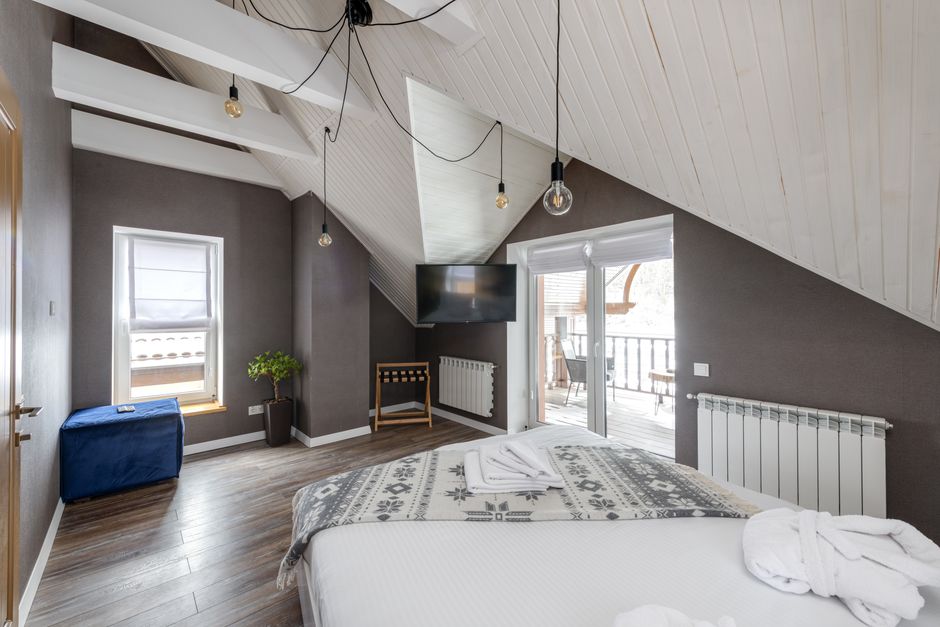
Thorndon has accommodation within the suburb itself, which makes it workable as a base if you want to be close to the northern edge of the central city rather than in the middle of it. Quest on Thorndon is listed at 61-63 Thorndon Quay, Wellington, 6011. Advertised rates start from NZD126, and booking is handled online. Rates change with season and availability, so confirm the current price and conditions directly with the property before you commit.
Detail | Information |
|---|---|
Property | Quest on Thorndon |
Address | 61-63 Thorndon Quay, Wellington, 6011, New Zealand |
Advertised rate | From NZD126 |
Booking | Online, with live agents available by phone |
Verify before booking | Current rates, availability and conditions with the property |
Living here: property and community
Thorndon is a residential suburb as well as a heritage one, and the local property market reflects that. OneRoof lists houses for sale in Thorndon, Wellington City, on its property portal, which gives a current picture of what is on the market and at what scale. Anyone considering a move should treat listings as a starting point and verify details through the agent and the relevant council records.
There is also an organised community. The Thorndon Residents’ Association describes itself as a group of locals working on behalf of people who live in or own property in Thorndon, and it invites residents and owners to join. For a newcomer, that kind of association is often the fastest way to learn how the suburb actually functions day to day, from local issues to the things that never make it into a guidebook.

What to expect on a wander
Thorndon rewards walking, but the walking is not flat. The suburb rises from the harbour side into the hills, and the streets wind rather than grid. Wear shoes you can climb in, and expect the wind that shaped the local building style in the first place. On a clear day the payoff is glimpses of the harbour between the villas, and a sense of how close the oldest part of the capital sits to the newest.
Give yourself time to look up at the trim and down at the street layout. The suburb reads better slowly. Photographs of the area held in national collections can help you spot what has changed, and the council archives can fill in the rest if a particular building catches your eye.
Frequently Asked Questions
Is Thorndon part of central Wellington?
Yes. Thorndon is located at the northern edge of Wellington’s central city, which puts it within easy reach of the centre while still feeling like a distinct residential suburb. It is one of the capital’s oldest suburbs and is known for its heritage streets and wooden villas rather than high rise development.
What postcode covers Thorndon?
Thorndon falls under postcode 6011. That postcode is shared with several other Wellington suburbs, so a postcode search alone will not isolate Thorndon. Check the suburb name alongside the number, and use the official address dataset if you need to confirm a specific street or property.
Why does Thorndon have so many wooden villas?
Early twentieth century villas in the suburb were built using abundant native timbers such as rimu, totara and matai, with heavy structure stripped back so homes could handle Wellington’s wind and earthquakes. They were built in the shadow of English brick grandeur, and that mix of light timber and native detailing became a local style.
Where can I research a Thorndon building’s history?
Start with Wellington City Council’s Archives Online, which includes a Thorndon section and records such as the Wellington street renumbering of 1907 to 1908. Building permit records are useful for dating construction and alterations. Read the archives guidance on access before you visit or send a request, since the process has specific steps.
Is Thorndon a practical base for a Wellington visit?
It can be. The suburb has accommodation within its boundaries, including Quest on Thorndon at 61-63 Thorndon Quay, with advertised rates from NZD126. Confirm current rates, availability and conditions with the property before booking, and check how you plan to get into the central city each day.