
From volcanic plateaus to ancient kauri forests, the North Island rewards those who slow down and take the scenic road
There’s a particular kind of freedom that comes with waking up to a new view every morning. The North Island of New Zealand is tailor-made for it — a compact, wildly varied landmass where a single day behind the wheel can take you from geothermal steam vents to surf-pounded black sand beaches, through cathedral-like forests and past colonial-era towns frozen in a gentler time. Whether you’re hiring a campervan for a week or committing to a full month of wandering, these routes will show you the North Island at its very best.
Route 1: The Volcanic Heart — Auckland to Wellington via the Central Plateau
Distance: Approximately 650 km | Suggested time: 7–10 days
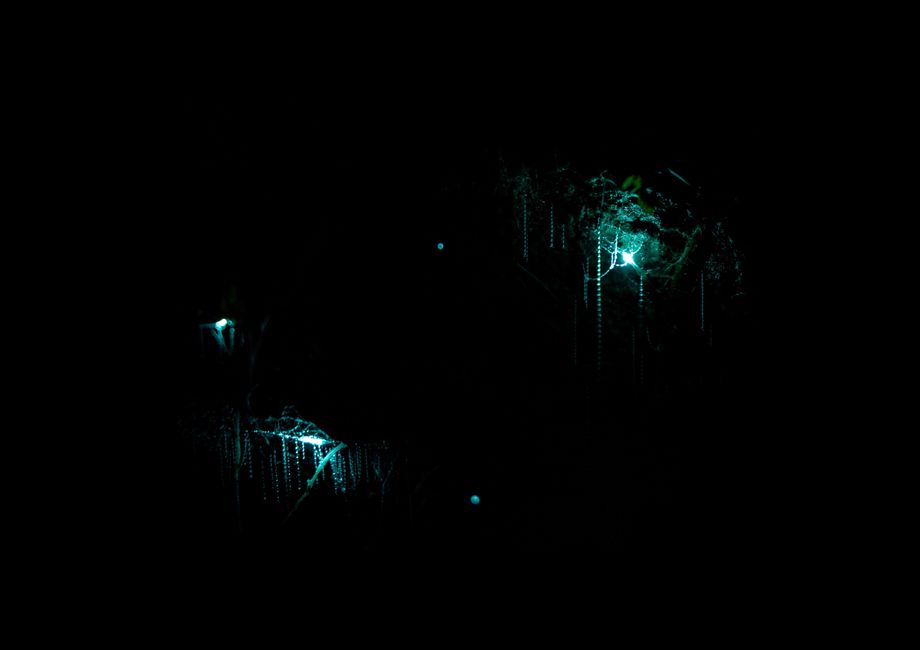
This is the classic North Island backbone, and for good reason. Starting in Auckland, head south on State Highway 1 through the Waikato — New Zealand’s agricultural heartland — making your first stop at Waitomo. The glow-worm caves here are genuinely magical; thousands of Arachnocampa luminosa larvae cling to cave ceilings and cast a blue-green bioluminescent light that no photograph quite captures. Freedom camp nearby at Mangaokewa Reserve, where a gorge walk through native bush makes for a dreamy morning.
Press on south to Rotorua, the North Island’s geothermal capital and the spiritual home of Te Arawa Māori culture. Park up at one of the many holiday parks on Lake Rotorua’s edge and spend at least two nights here. The Redwoods Whakarewarewa Forest offers mountain biking and walking tracks through towering California redwoods, while Te Puia gives you steaming mud pools and the enormous Pōhutu geyser erupting multiple times daily. If you can score a spot at Wai-O-Tapu’s Champagne Pool — a vivid orange-rimmed thermal lake — you’ll understand why people call Rotorua otherworldly.
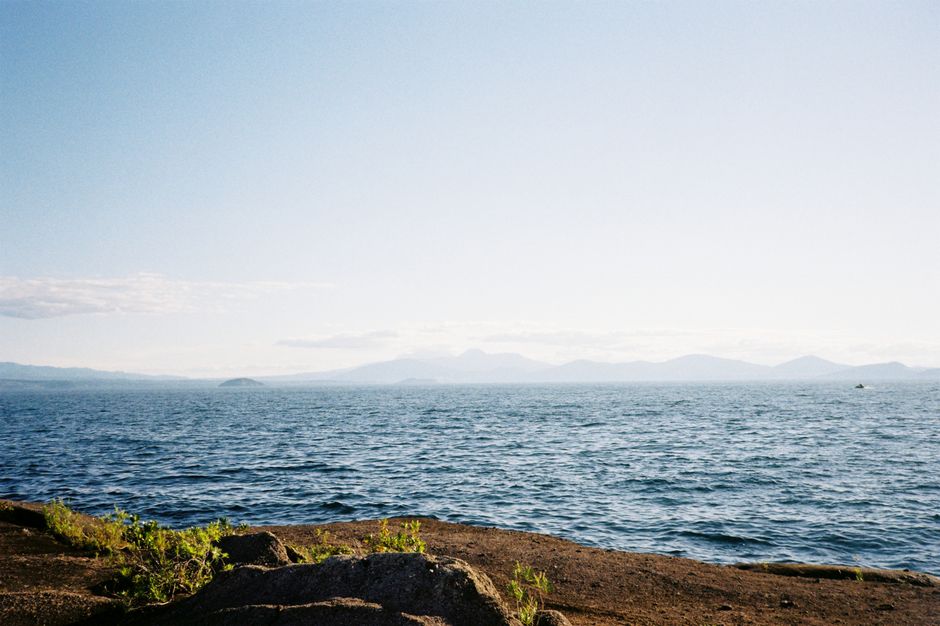
From Rotorua, dip east to Taupō, New Zealand’s largest lake, sitting in the caldera of a supervolcano. On a clear day, the lake appears almost Mediterranean in its colour. Huka Falls, a short drive from town, thunders through a narrow rock channel with staggering force — it’s far more dramatic than any waterfall of its modest height has any right to be. Freedom campers do well at Ātiamuri or the many DOC sites lining the lake’s western shore.
The journey south through the Tongariro National Park is the undeniable highlight of this route. The volcanic trio of Ruapehu, Ngāuruhoe, and Tongariro dominate the skyline in a way that feels primal. If you’re fit and the weather cooperates, the Tongariro Alpine Crossing is widely regarded as New Zealand’s best single-day walk — 19.4 kilometres of lunar-like terrain, emerald crater lakes, and sweeping views. The National Park Village holiday park puts you within easy striking distance.
Finishing in Wellington, New Zealand’s compact, culture-rich capital, gives you the perfect urban bookend. Park up in the city and spend a day at Te Papa Tongarewa museum, wander the Cuba Street precinct, and ride the cable car up to the Botanic Garden for panoramic views over the harbour.
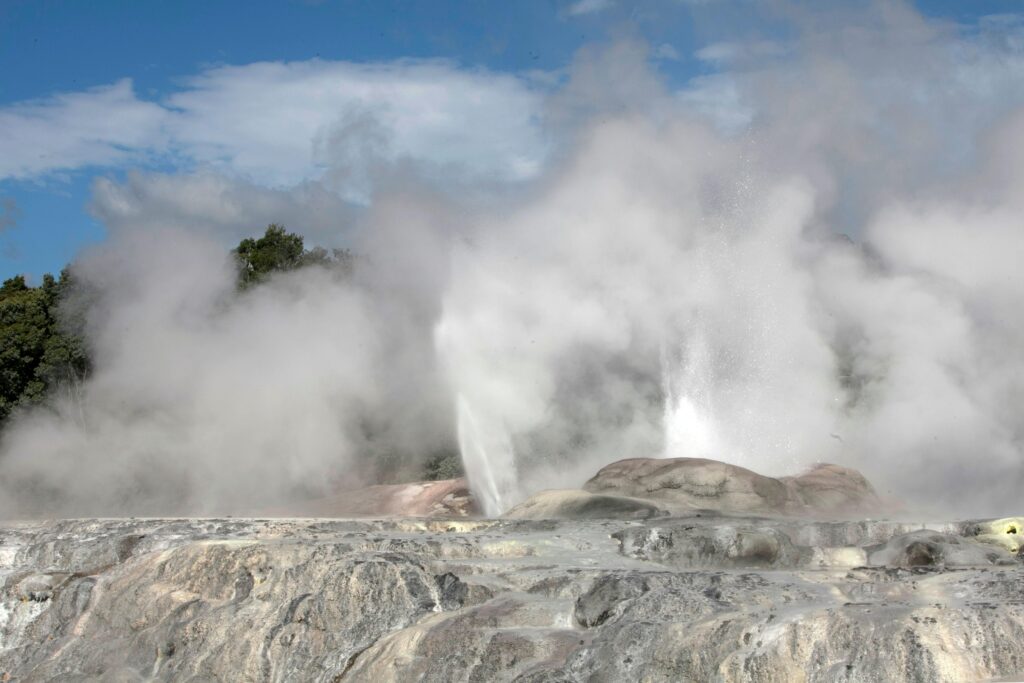
Photo by Jeffry Surianto
Route 2: The Coromandel Loop — Auckland to Thames and Beyond
Distance: Approximately 350 km circular | Suggested time: 4–6 days
Often overlooked in favour of the more famous South Island, the Coromandel Peninsula is arguably the North Island’s most beautiful coastal circuit. Leave Auckland via the Seabird Coast, hugging the Firth of Thames past shorebird-dotted tidal flats, before arriving in Thames, the gateway town to the peninsula.
The drive up the peninsula’s western coast on SH25 is spectacular — narrow roads wind above the Firth with the kind of views that make you pull over every ten minutes. Stop for a swim at Waihi Beach or push north to Coromandel Town, a delightfully unhurried place with excellent artisan food and a historic gold-mining past. The 309 Road that cuts across the peninsula passes a waterworks sculpture garden and a kauri grove that’s worth every corrugated kilometre.
On the eastern coast, Hahei is the base for Cathedral Cove — a sea arch and cave accessible by a 45-minute walk through coastal scrub or by kayak. Time your visit for early morning before the day-trippers arrive and you may have it to yourself. A short drive south, Hot Water Beach lets you dig your own natural spa pool in the sand at low tide, a phenomenon that draws crowds but never loses its novelty.
The southern tip of the peninsula, around Whangamatā and Waihi, has a more local, relaxed feel — good surf, unpretentious cafés, and easy access to the Karangahake Gorge, where a loop walk through old gold-mining tunnels and along a dramatic river gorge is one of the region’s best-kept secrets.
Route 3: Northland’s Ancient Forests and Bay of Islands — Auckland to Cape Reinga
Distance: Approximately 500 km one way | Suggested time: 7–10 days
Heading north from Auckland is heading back in time. Northland moves slowly, the light is golden and soft, and the landscape speaks of deep history — both Māori and colonial.
Your first major stop should be the Kauri Coast. The ancient kauri trees of Waipoua Forest are among the most awe-inspiring living things in New Zealand. Tāne Mahuta, the largest known kauri, stands about 51 metres tall and is estimated to be between 1,250 and 2,500 years old. A short boardwalk from the road brings you face to face with this giant — it’s one of those encounters that recalibrates your sense of scale and time.
Continue north to the Bay of Islands, anchoring yourself in Paihia or Russell. This sheltered bay studded with 144 islands is the birthplace of modern New Zealand — the Treaty of Waitangi was signed here in 1840, and the Waitangi Treaty Grounds offer a genuinely moving and well-presented history. Take a day cruise out to the Hole in the Rock at Piercy Island if the swell allows, or kayak between islands in the late afternoon light.
From Paihia, push north through Kerikeri — worth a stop for its orchards, olive groves, and excellent local cafés — and continue up to Kaitāia before making the final run to Cape Reinga. This is where the Tasman Sea and the Pacific Ocean meet, marked by a lonely lighthouse at the tip of the country. For Māori, this is where the spirits of the dead leap from a pohutukawa tree into the ocean to begin their journey home to Hawaiki. Standing here, watching the two seas collide in a white line on the horizon, it’s easy to understand why this place is considered sacred.
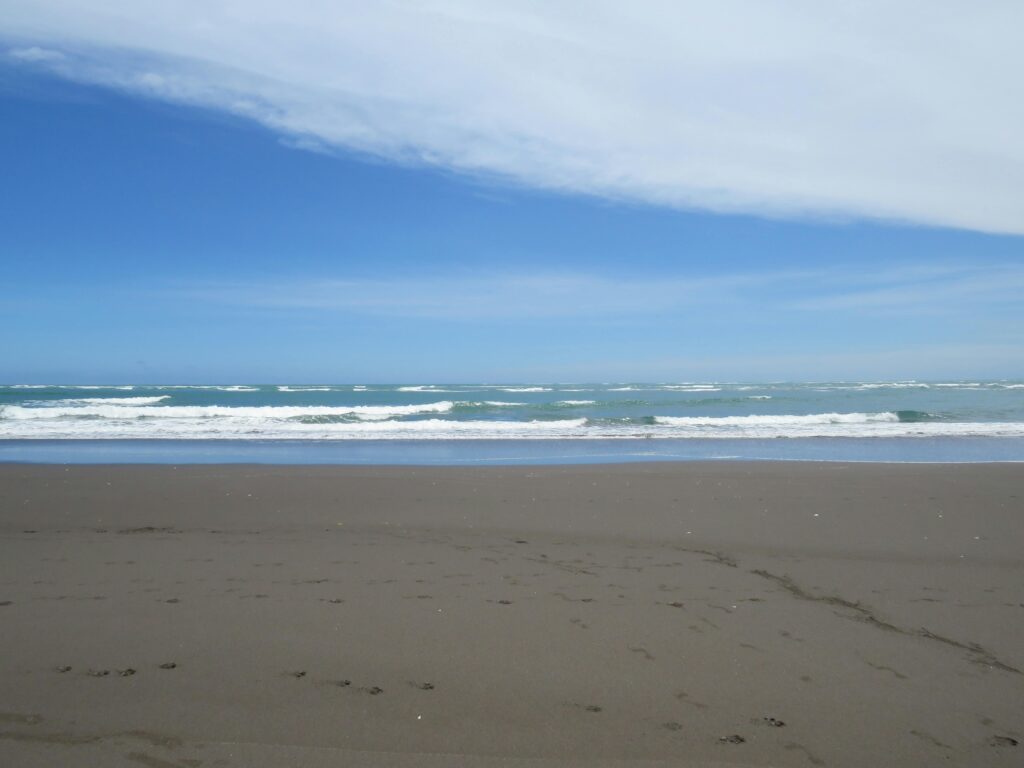
The return journey down Ninety Mile Beach — done with a tour or a 4WD only; standard campervans should stick to the highway — is one of New Zealand’s most surreal drives.
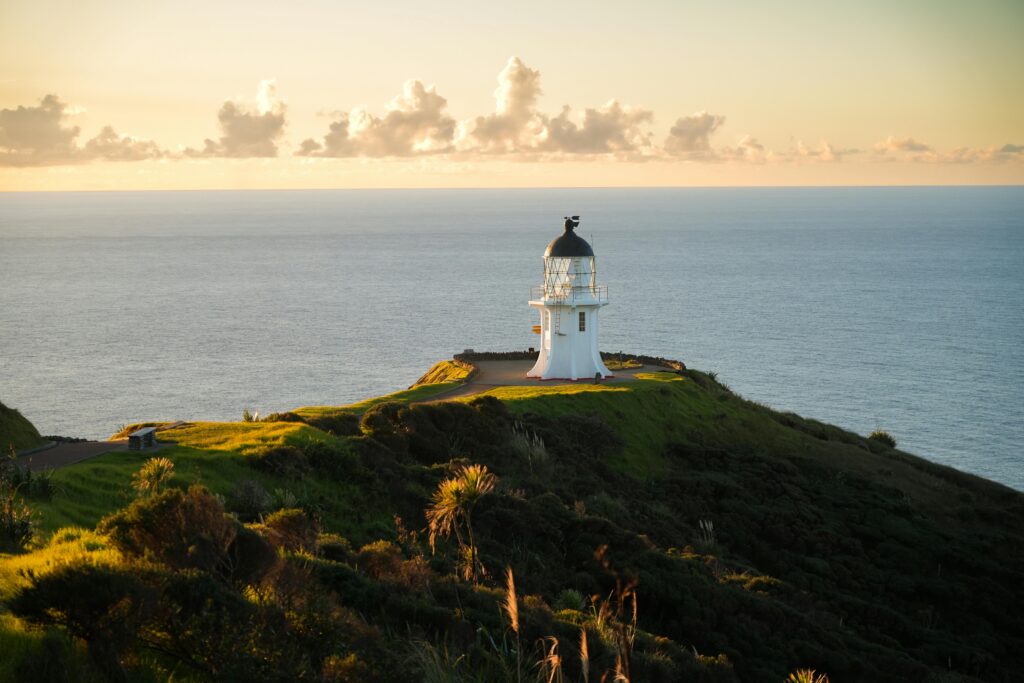
Photo by Donovan Kelly
Practical Tips for North Island Campervan Travel
Freedom camping: The North Island has a healthy network of DOC (Department of Conservation) sites, many of which are free or very low cost. Download the CamperMate or Rankers app before you leave — they’ll save you hours of searching. Always respect the rules: no fires where prohibited, pack out your rubbish, and use the toilet facilities provided.
Timing: November through March offers the warmest and driest conditions, but the school holidays (December–January and Easter) bring crowds, especially on the Coromandel. April and May are an underrated sweet spot — warm enough, golden-leaved, and quiet.
Roads: The North Island’s roads range from excellent motorways to single-lane gravel tracks. Check your campervan rental agreement carefully for restrictions on unsealed roads. Allow far more time than Google Maps suggests — the temptation to stop is constant and entirely worth it.
Respect te Tiriti: Many of the North Island’s most significant sites carry deep cultural meaning for Māori. Approach with respect, read the information provided, and consider a guided experience at places like Waitangi or Te Puia to hear the stories told by those who hold them.
The North Island doesn’t ask much of you. A full tank of diesel, a decent coffee at the start of each day, and a willingness to take the road marked scenic route whenever the option appears. The rest takes care of itself.
Mā te wā — until next time.