With over 15,000 kilometres of coastline, New Zealand offers some of the world’s finest walking on its shores
New Zealand is, above all else, a coastal country. No point on the main islands is more than 128 kilometres from the sea, and the result is a nation shaped — psychologically as much as geographically — by the presence of water on every horizon. The coastline itself is extraordinary in its variety: towering sea cliffs, powder-white sand beaches, volcanic black shores, ancient limestone arches, mangrove-threaded estuaries, and fiord walls plunging straight into dark water. Walking it, even in short sections, is one of the most rewarding things you can do in Aotearoa.
What follows is a guide to the very best coastal walks in New Zealand — from leisurely half-day strolls to multi-day epics, spread across both islands and every type of coastal landscape the country has to offer. Some are famous. A few are still relatively undiscovered. All of them will stay with you long after you’ve unlaced your boots.
Te Araroa — The Coastal Sections of New Zealand’s Long Trail
Before diving into individual walks, it’s worth acknowledging the Te Araroa Trail — a 3,000-kilometre walking route stretching from Cape Reinga in the north to Bluff in the south. The full trail takes 3–4 months to complete and passes through every type of New Zealand landscape, but several of its coastal sections are among the finest stretches of walking in the country and can be completed as standalone day or multi-day walks without any commitment to the full trail.
The Northland coastal sections in particular — including the stretch along Ninety Mile Beach and through the kauri forests near the coast — offer a flavour of New Zealand walking that is genuinely unlike anywhere else. Keep Te Araroa in mind as you explore: many of the walks below follow its route in part.
Abel Tasman Coast Track — Golden Bays and Aquamarine Water
Location: Nelson/Tasman region, South Island Distance: 60 km full track | Time: 3–5 days | Grade: Easy to moderate
The Abel Tasman Coast Track is arguably New Zealand’s most beloved coastal walk, and it earns that reputation fully. The track traces the northern edge of Abel Tasman National Park along a coastline of such consistent beauty — successive golden beaches, granite headlands draped in native bush, water shifting from jade to deep blue — that the difficulty is not the walking but the stopping.
The full five-day walk is one of New Zealand’s nine Great Walks, and hut and campsite bookings are required through the DOC system from October to April. The track is well-formed and genuinely accessible to walkers of moderate fitness — there are no significant altitude gains, and the tidal crossings at Awaroa and elsewhere add a satisfying element of timing and planning to the journey.
For those with less time, the Tōtaranui to Bark Bay section is widely considered the track’s finest stretch. Water taxis operate from Marahau and Kaiteriteri to drop walkers at any point along the coast, allowing you to walk one section and taxi back — a flexible and enormously popular approach.
The Mārahau Estuary at the southern end of the track is one of the most photogenic spots in the South Island at low tide, with channels of water threading through golden sandflats backed by bush-covered hills.
Coromandel Coastal Walkway — A Three-Day Hidden Gem
Location: Coromandel Peninsula, North Island Distance: 10 km one way | Time: 3–4 hours (or overnight with accommodation) | Grade: Moderate
The Coromandel Coastal Walkway between Fletcher Bay and Stony Bay at the tip of the Coromandel Peninsula is one of the North Island’s finest and least-crowded coastal walks. Both ends of the track are accessed by long, winding gravel roads from Coromandel Town — which keeps the numbers down and ensures a sense of genuine wilderness.
The walk itself traverses coastal farmland and regenerating native bush along cliff tops above the Hauraki Gulf, with views stretching across to Great Barrier Island and, on clear days, back towards Auckland. The descent into Stony Bay through a sheltered valley of mature pohutukawa is one of the North Island’s most peaceful moments. A water taxi or pre-arranged vehicle shuttle is required to complete the one-way track.
Go in late November or December and the pohutukawa trees — New Zealand’s iconic coastal Christmas tree — will be in full crimson bloom, turning the clifftops into something extraordinary.
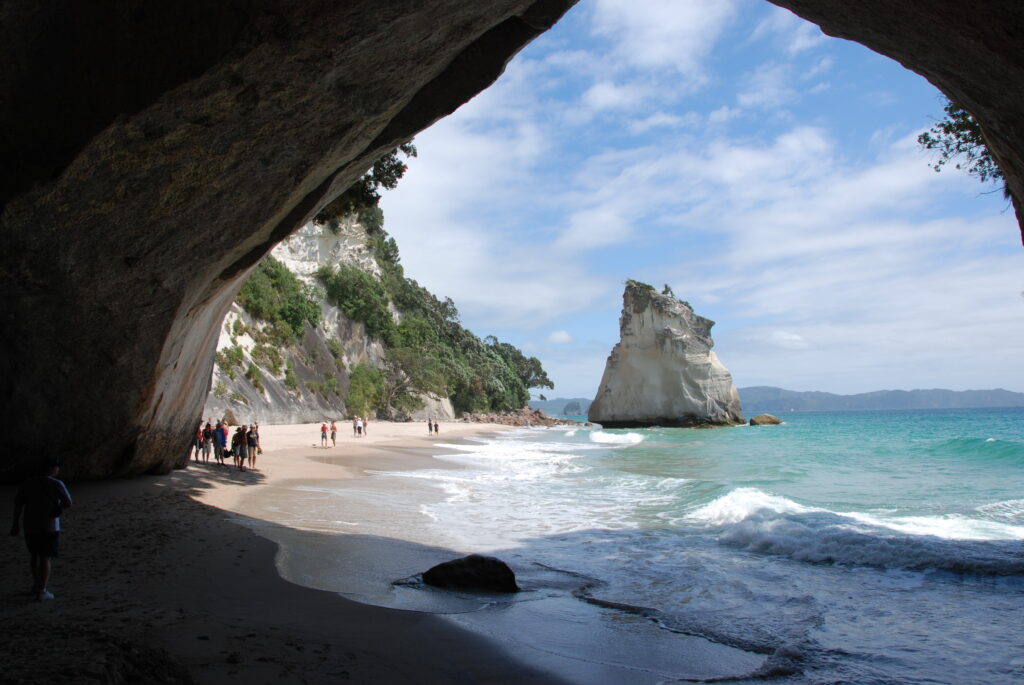
Tongariro Northern Circuit Coastal Contrast — Cape Brett Track
Location: Bay of Islands, Northland Distance: 16 km one way | Time: 2 days | Grade: Moderate to challenging
The Cape Brett Track in the Bay of Islands is one of Northland’s most rewarding overnight walks — a journey through regenerating coastal forest along a narrow peninsula that ends at a lighthouse perched above the open Pacific. The views from the cape back across the bay — 144 islands scattered across blue water — are among the most beautiful in the North Island.
The track is managed by DOC and passes through privately owned Māori land; a track fee applies. The Cape Brett Hut at the end of the peninsula offers basic accommodation and front-row seats to sunsets over the Tasman. A sea cave known as the Hole in the Rock at Piercy Island sits just offshore — visible from the lighthouse and accessible by boat tour from Paihia.
The second day’s walk back gives you the same views from the opposite direction and in different light — somehow just as good.
Otago Peninsula Walks — Albatrosses and Wild Seas
Location: Dunedin, South Island Distance: Various | Time: Half to full day | Grade: Easy to moderate
The Otago Peninsula curling out from Dunedin into the Pacific is one of New Zealand’s most extraordinary wildlife landscapes, and the coastal walking here combines dramatic scenery with genuine wildlife encounters that are difficult to match anywhere else in the country.
The Sandfly Bay walk descends through sand dunes to a beach where New Zealand sea lions haul out and nap with magnificent indifference to human visitors. The Lovers Leap and Sandymount loop offers spectacular cliff-top walking above the open ocean with views north towards the Catlins and south towards the Antarctic. The Highcliff Road walkway traces the spine of the peninsula above both harbours with sweeping 360-degree views.
Most remarkably, the Royal Albatross Centre at Taiaroa Head sits at the peninsula’s tip — the only mainland albatross breeding colony in the southern hemisphere. Watching these birds — wingspan up to three metres — launch from the clifftop and wheel out over the ocean on a blustery afternoon is one of New Zealand’s most humbling wildlife experiences.
Rakiura Track — Stewart Island’s Wilderness Coast
Location: Stewart Island/Rakiura, South Island Distance: 36 km circuit | Time: 3 days | Grade: Moderate
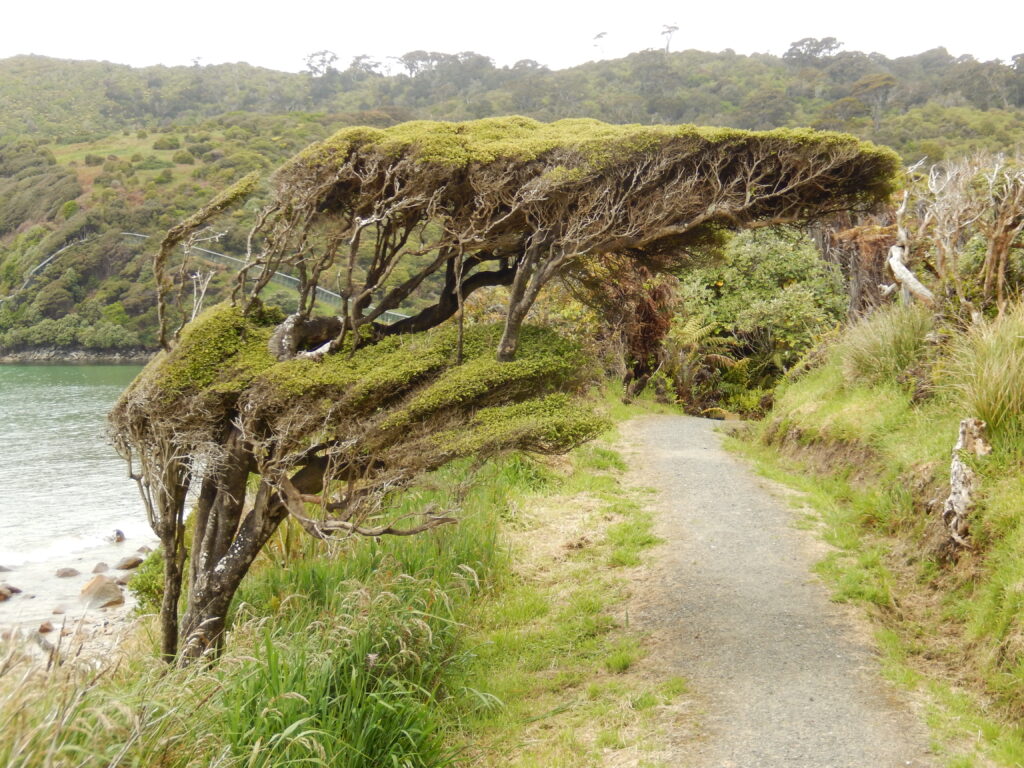
For those willing to take the ferry or flight to Stewart Island/Rakiura — New Zealand’s third-largest island, sitting below the Foveaux Strait — the Rakiura Track offers a coastal walking experience of profound wildness. The island receives heavy rainfall, the tracks are genuinely muddy, and the infrastructure is minimal by Great Walk standards. This is exactly why it rewards.
The three-day circuit passes through coastal podocarp forest, along beaches of dark sand edged by ancient rimu and miro trees, and through a landscape that feels genuinely remote in a way that is increasingly rare. The night skies here are among the darkest in the world — Rakiura was designated a Dark Sky Sanctuary in 2019 — and the chances of hearing a kiwi calling in the bush at dusk are close to certain.
The small settlement of Oban on Halfmoon Bay serves as the walk’s base, offering a pub, a remarkably good restaurant, a community hall, and a population of around 400 people who have chosen the most beautifully impractical place in New Zealand to live.
Kāpiti Island — A Half-Day Walk to Remember
Location: Paraparaumu, North Island Distance: 10 km return to summit | Time: 4–5 hours | Grade: Moderate
Kāpiti Island lies off the Kāpiti Coast north of Wellington, visible from State Highway 1 and accessible by water taxi from Paraparaumu Beach. It is a DOC-managed nature reserve and one of New Zealand’s most successful predator-free wildlife sanctuaries — a place where birds that have been hunted to near-extinction on the mainland survive and thrive.
Numbers are strictly limited (50 visitors per day), and advance booking through DOC is essential. The summit track through dense native bush rises 521 metres and arrives at views stretching north to the Taranaki maunga and south to the Cook Strait. But it is the sounds that will stay with you — the air above the bush is alive with the calls of kōkako, saddleback, little spotted kiwi, and kākāriki in a chorus that represents what New Zealand’s forests sounded like before the arrival of predators.
The Heaphy Track — Forest, Coast, and Nikau Palms
Location: Kahurangi National Park, South Island Distance: 78 km one way | Time: 4–6 days | Grade: Moderate
The Heaphy Track is the longest of New Zealand’s Great Walks and one of the most diverse — it traverses the full width of Kahurangi National Park from Golden Bay in the east to the wild West Coast in the west. The final coastal section, where the track drops to the Tasman Sea and follows cliffs above pounding surf through forests of nikau palms — the world’s southernmost palm — is unlike anything else in New Zealand walking.
The nikau section in particular, where ancient palms lean over the track above a surging blue sea, has an almost prehistoric quality. Dolphins are commonly seen in the surf below the cliffs. Great walking days end at coastal huts where the sound of the Tasman fills the night.
Practical Tips for Coastal Walking in New Zealand
Tides matter: Several coastal tracks involve tidal crossings or beach sections that are impassable at high tide. Always check tide times before setting out and build them into your timing.
Weather turns fast: Coastal weather in New Zealand — particularly on the West Coast, Northland, and the Otago Peninsula — can change quickly. Pack waterproofs regardless of the forecast.
Bookings are essential for Great Walks: DOC huts and campsites on the Abel Tasman, Heaphy, and Rakiura tracks must be booked in advance through the DOC website during the season. They sell out weeks or months ahead in summer.
Sun protection: Reflected UV off water and sand is significantly stronger than many visitors expect. High-SPF sunscreen, a hat, and UV sunglasses are essential on any coastal walk.
Leave no trace: New Zealand’s coastline is remarkably clean by global standards. Keep it that way — carry out all rubbish, stay on formed tracks, and give nesting birds and resting wildlife plenty of space.
New Zealand’s coastline is one of the great natural gifts of this planet. Walk as much of it as you possibly can.
Kia kaha — walk strong.