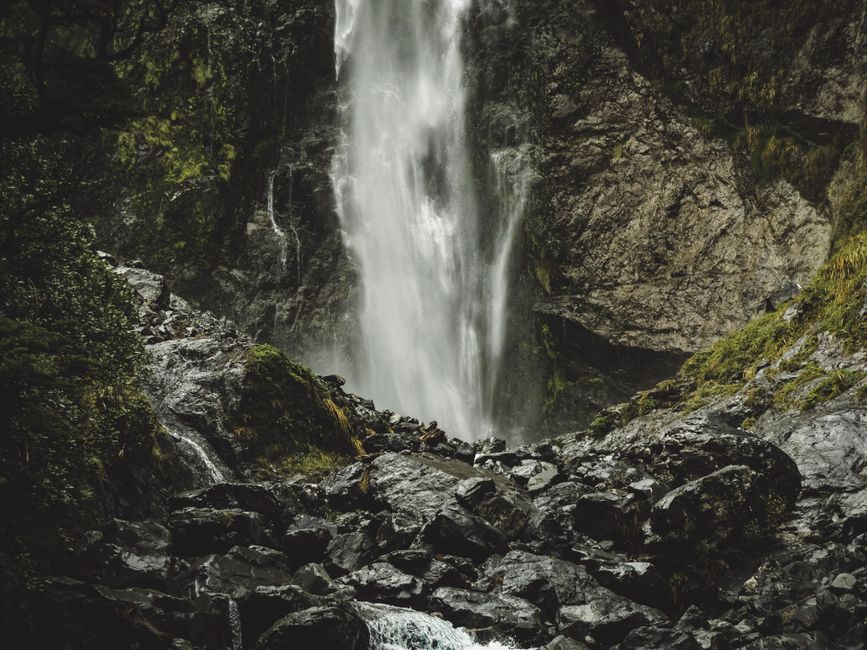
New Zealand is a country shaped by water. Rain, snow melt, and alpine streams carve their way through ancient forests and steep mountain faces, creating hundreds of waterfalls along the way. For travellers driving through the North Island or South Island, a short walk to a waterfall is one of the simplest and most rewarding experiences you can add to your itinerary. Whether you are after a thundering cascade visible from a cruise boat or a quiet swimming hole surrounded by native bush, the range of waterfalls in New Zealand is remarkable.
According to the Wikipedia list of waterfalls in New Zealand, there are 249 named waterfalls and 31 named rapids in the country. Another dedicated community database, waterfalls.co.nz, lists 281 published waterfalls as of mid-2025, with a further 240 still to be added. The same database notes that New Zealand has at least seven waterfalls named Bridal Veil and 17 whose name includes Rere, a Māori word meaning to leap or descend. With so many to choose from, where do you start?
North Island Waterfalls to Add to Your List
The North Island is home to several easily accessible waterfalls that suit families, casual walkers, and photographers. Many are close to main towns and require only a short walk from the carpark.
Whangarei Falls
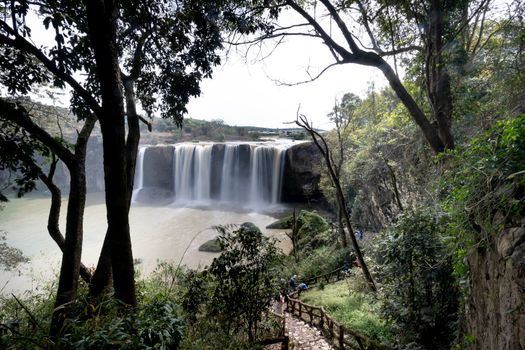
Located right in the middle of Whangarei city, Whangarei Falls is a standout for convenience and beauty. One photographer who rated waterfalls across Northland and Waikato gave Whangarei Falls a perfect 9 out of 9 overall, scoring 3 out of 3 in each category. The waterfall drops over a basalt cliff into a pool surrounded by mature trees, and the short loop walk takes you both to the top and the base of the falls.
Rainbow Falls, Kerikeri
Rainbow Falls on the Kerikeri River is one of the best-known waterfalls in the Bay of Islands region. The same photographer rated it 7 out of 9 overall. Early morning is the best time to visit if you want to avoid crowds and catch the sun hitting the mist to create the rainbow that gives the falls its name. The walk from the carpark is short and well-formed, making it a good option for a quick stop during a Northland road trip.
Kitekite Falls, Waitakere Ranges
In the Waitakere Ranges west of Auckland, Kitekite Falls is a multi-tiered waterfall that drops into a large swimming pool. The walk is about one hour return through native bush. On waterfalls.co.nz, Kitekite Falls holds a 4-star rating. Because it is a popular spot, it is best visited on a weekday or early in the morning to have the pool to yourself.
Karekare Falls, Waitakere Ranges
Just a short distance from Kitekite, Karekare Falls is a slender 30-metre drop that cascades over a sandstone cliff. The walk is only about 10 minutes return, making it one of the quickest waterfall walks in the region. Like Kitekite, it has a 4-star rating on waterfalls.co.nz. The small carpark can fill quickly, so plan to arrive early.
Omanawa Falls, Bay of Plenty
Omanawa Falls is a hidden gem in the Bay of Plenty region, about 40 minutes return walk from the road. It is the highest-rated waterfall in this list according to waterfalls.co.nz, where it scores 5 out of 5 stars. The track involves some steep sections and steps, so sturdy footwear is recommended. The waterfall itself is a wide curtain of water dropping into a deep green pool.
Charlie’s Rock and Piroa Falls
Further north in the Waikato region, Charlie’s Rock is a swimming hole rather than a classic waterfall, but it is listed alongside other falls in photographer ratings. It scored 5 out of 9 overall. Piroa Falls, also in the same area, received the same 5 out of 9. Both are less visited than Whangarei or Rainbow Falls, making them good choices if you want a quieter experience.
South Island Waterfalls Worth the Journey
The South Island’s mountain ranges and fiords produce some of the tallest and most dramatic waterfalls in the country. While some require a boat trip or a long gravel road drive, the payoff is unforgettable.
Lady Bowen Falls, Milford Sound
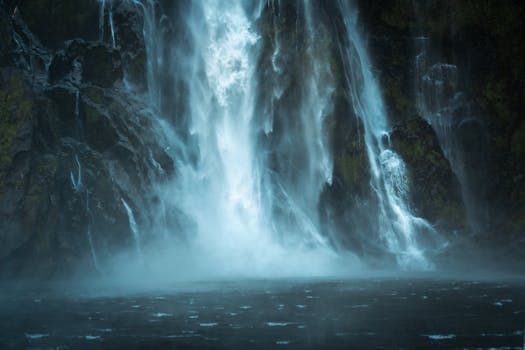
Lady Bowen Falls is the tallest of the Milford Sound waterfalls mentioned in our sources, standing at 162 metres. It powers the hydroelectric facility that supplies electricity to the buildings and facilities in Milford Sound, including the visitor centre and the Fiordland National Park offices. The falls are visible from the Milford Sound cruise boats, and you can see water plunging straight down the sheer granite face.
Stirling Falls, Milford Sound
Also in Milford Sound, Stirling Falls is 151 metres tall and is only accessible by cruise. On a calm day, the boats often sail close enough that you can feel the spray. The falls are fed by a hanging valley, and their flow can vary considerably between wet and dry spells.
Thunder Creek Falls, Haast Pass
Heading south on State Highway 6 through Haast Pass, Thunder Creek Falls is a 28-metre horse tail fall that drops from a narrow cleft in the schist rock. The walk from the road takes only about five minutes, making it one of the easiest waterfall stops on the South Island. The track is well-maintained and suitable for most fitness levels.
Fantail Falls, Haast Pass
Just a few kilometres further south along the same highway, Fantail Falls is a 23-metre fan-shaped fall that spreads out over a wide rock face. Like Thunder Creek, it requires only a short walk from the road. Both falls are popular photo stops for drivers crossing between the West Coast and Wanaka.
Wishbone Falls, near Wanaka
Wishbone Falls is tucked away in the Matukituki Valley near Wanaka. Getting there requires driving 33 kilometres on a gravel road, so a vehicle with decent clearance is recommended. The walk from the carpark is not long, but the rough road access means few visitors make the trip. The waterfall splits into two channels near its base, resembling a wishbone – hence the name.
Comparing Heights and Ease of Access
The waterfalls in New Zealand vary enormously in both size and accessibility. To help you plan your trip, here is a comparison of the falls covered in this guide based on the information available.
Waterfall | Height (metres) | Walk time | Special access |
|---|---|---|---|
Lady Bowen Falls | 162 | Cruise only | Milford Sound cruise |
Stirling Falls | 151 | Cruise only | Milford Sound cruise |
Whangarei Falls | Not specified | Short loop | City location |
Rainbow Falls | Not specified | Short | Early morning recommended |
Kitekite Falls | Not specified | 1 hour return | 4-star rating |
Karekare Falls | ~30 (est.) | 10 minutes return | 4-star rating |
Omanawa Falls | Not specified | 40 minutes return | 5-star rating |
Thunder Creek Falls | 28 | 5 minutes | Horse tail fall |
Fantail Falls | 23 | 5 minutes | Fan-shaped |
Wishbone Falls | Not specified | Short walk | 33 km gravel road |
For the easiest waterfall to reach without a boat or long drive, Karekare Falls and Thunder Creek Falls are the picks. If you want the tallest falls in this selection, the Milford Sound pair of Lady Bowen and Stirling Falls are hard to beat, though they do require a cruise ticket.
Photographer Ratings for Northland and Waikato Falls
A photographer who rates waterfalls on a 9-point scale (3 points each for three categories) published their scores for several Northland and Waikato waterfalls. Whangarei Falls scored a perfect 9 out of 9, followed by Rainbow Falls at 7 out of 9. Charlie’s Rock and Piroa Falls both scored 5 out of 9. While these ratings are subjective, they give a useful benchmark if you are deciding which falls to prioritise during a trip north of Auckland.
Planning Your Waterfalls in New Zealand Road Trip
When you set out to see waterfalls in New Zealand, a few practical tips will improve your experience. Visit early in the morning, especially for popular ones like Rainbow Falls or Kitekite Falls, to avoid crowds and get better light for photos. Check the weather forecast before you go – heavy rain can turn a trickle into a torrent, but it also makes tracks muddy and slippery. Many waterfalls are in areas with limited mobile reception, so download your maps and directions beforehand.
If you are travelling in a campervan, you will find that many of the waterfalls listed sit along major driving routes. The Haast Pass waterfalls (Thunder Creek and Fantail) are perfect leg-stretcher stops between the West Coast and Central Otago. In the North Island, the Waitakere Ranges waterfalls are within an hour of Auckland, while Whangarei Falls and Rainbow Falls are ideal for a Bay of Islands itinerary.
For those after a swimming spot, Charlie’s Rock is confirmed as a swimming hole, though its depth and safety depend on recent rainfall. Other waterfalls such as Kitekite Falls and Omanawa Falls have pools that are often used for swimming, but local conditions should always be checked before entering the water.
Frequently Asked Questions
Can you swim at any of these waterfalls?
Charlie’s Rock is the only waterfall in our sources that is explicitly described as a swimming hole. Kitekite Falls and Omanawa Falls have pools that are often used for swimming, but there is no official confirmation of swimming safety or depth in the provided information. Always check local conditions and avoid swimming after heavy rain when currents can be dangerous.
Which waterfall is the easiest to reach?
Thunder Creek Falls in Haast Pass requires only about a five-minute walk from the road. Karekare Falls in the Waitakere Ranges is also very easy, with a 10-minute return walk. Both are suitable for families and those with limited mobility, though the tracks may have steps or uneven surfaces.
How many waterfalls are there in New Zealand?
The number depends on the source. Wikipedia lists 249 named waterfalls and 31 named rapids. The community database waterfalls.co.nz had 281 published waterfalls as of mid-2025, with 240 more yet to be published. The true total is likely higher when including unnamed or unmapped falls.
What does the name ‘Bridal Veil’ refer to?
A Bridal Veil waterfall is one that drops in a long, narrow stream that spreads into a veil of mist before hitting the pool below. New Zealand has at least seven waterfalls with that name. The term comes from the resemblance to a bride’s veil.
Whether you are planning a dedicated waterfall tour or just looking for a rewarding short walk during a longer drive, New Zealand’s waterfalls offer something for everyone. From the perfect 9/9 rating of Whangarei Falls to the remote gravelled route of Wishbone Falls, each one adds a splash of nature’s power to the landscape. Pack your walking shoes, a rain jacket, and your camera – there is always another waterfall waiting around the next bend.